8 Engaging SDG 16 Lesson Plans for Teaching Peace, Justice and Strong Institutions
 Lorena Vandewijngaerden —
SDG 16, Peace, Justice and Strong Institutions, focuses on promoting peaceful and inclusive societies, ensuring access to justice for everyone, and building strong, accountable institutions. It covers important classroom topics such as peace, fairness, equality, human rights, empathy, conflict resolution, democracy, and making responsible choices.
For teachers, SDG 16 is a valuable topic because students can connect these big ideas to situations they experience in their everyday lives. A disagreement with a classmate, including someone who feels left out, deciding what is fair, or learning how rules help people live and work together can all become starting points for discussing peace, justice, and respect. Through age-appropriate activities, such as (games, quizzes...) students can explore how their own choices and actions can help create a kinder, fairer, and more peaceful community.
💡 With BookWidgets, you can turn SDG 16 into interactive digital lessons students can complete individually, in pairs, or as part of a project. Use the lesson ideas below as templates you can adapt to your students and share through Google Classroom, Microsoft Teams, Canvas, Moodle, or another LMS. You can find them together in this free BookWidgets group on SDGs.
Be sure to check out our other SDG lesson resources below, where we share ready-to-use activities for teaching all 17 Sustainable Development Goals.
Ready-to-use BookWidgets lessons in this post
In this post, you’ll find 8 ready-to-use BookWidgets activities about SDG 16: Peace, Justice and Strong Institutions, suitable for different ages and learning levels. Use them as a lesson starter, classroom activity, or independent task. Simply copy the widgets to your BookWidgets account, adapt them to your needs, and share them with your students through a link. Keep reading to explore these activities and see how you can use them in your classroom.
Open this Quiz Widget and Start Your Lesson! — Middle school students take on the role of a mayor and make decisions about peace, fairness, and responsible choices in their town.
Explore Kindness With This Interactive Quiz! — Primary students recognize kind and unkind behavior and explore how their actions can support empathy, respect, and peaceful relationships.
Discover Peace Through Play! — Kindergarten students sort pictures into peaceful and non-peaceful groups while learning about kindness, respect, and peaceful behavior.
Create a Peaceful Classroom Together! — Kindergarten students explore pictures and discuss the choices that can help create a happy, safe, and peaceful classroom.
Explore Rules and Responsibility Through Goldilocks! — Middle school students explore rules, boundaries, responsibility, and fairness through the familiar story of Goldilocks.
Explore Democracy Through Discussion! — Middle school students discuss different situations, share their opinions, and explore democracy, fairness, and different viewpoints.
Explore SDG 16 Through This Video Quiz! — Primary students learn about SDG 16 and explore why peace, fairness, and justice are important through an interactive video quiz.
Connect SDG 16 to the Real World! — High school students explore newspaper articles and connect current events to peace, justice, and strong institutions.
What is SDG 16: Peace, justice and Strong intitutions?
SDG 16: Peace, justice and Strong intitutions is one of the 17 Sustainable Development Goals created by the United Nations. The goal of this SDG is to promote peace, justice, human rights, equality, and strong and inclusive institutions.
In a nutshell, SDG 16 is about helping people live peacefully, treating everyone fairly, protecting their rights, and making sure institutions are fair and trustworthy.
The goal of this SDG covers topics like:
- Peace and conflict resolution
- Justice and fairness
- Human rights
- Equality and inclusion
- Democracy and participation
- Rules and responsibilities
- Empathy and respect
Review this checklist, which outlines all the target goals for SDG 16.

For students, SDG 16 can be explained like this: SDG 16: Peace, Justice and Strong Institutions is a global goal that encourages people, governments, and organizations to build peaceful and fair societies. It promotes human rights, equality, justice, and strong institutions, while encouraging everyone to treat others with respect and help create a safer and more inclusive world.
Why Should Teachers Include SDG 16 in Their Lessons?
Teaching SDG 16 helps students understand that peace, justice, and equality are part of everyday life. Students can explore questions such as: Why are rules important? How can conflicts be solved peacefully? What does it mean to treat everyone fairly?
SDG 16 fits well into different subjects:
- Social studies can help students explore human rights, equality, democracy, and how communities can become more fair and inclusive.
- Language can use topics like peace, fairness, and justice for discussions, debates, persuasive writing, and analyzing different perspectives.
- History can explore past conflicts, peace movements, human rights, and how societies have changed over time.
- Civics can help students understand democracy, laws, rights, responsibilities, and how people can participate in their communities.
- Social-emotional learning can focus on empathy, respect, communication, cooperation, and peaceful ways to solve conflicts.
With BookWidgets, you can let your students explore peace, justice, and strong institutions through all kinds of interactive widget types. Use quizzes to check their understanding, split worksheets to work with different resources, interactive images to explore classroom situations, video quizzes to learn through video.
8 Free and Interactive Lesson Ideas to Teach SDG 16 - Peace, justice and Strong intitutions
Here, you’ll find 8 BookWidgets lesson ideas to help students explore SDG 16 from different perspectives, with activities suited to different ages and learning levels.
1. Be the Mayor: Peace and Fairness Decision-Making Quiz
| Icon | Area | Explanation |
|---|---|---|
| 🎓 | Subject & Grade | Social studies and civic education - middle school |
| 🎯 | Learning goal | Students explore peace, fairness, and responsible decision-making by taking on the role of a mayor. |
| 🧩 | BookWidgets widget type | Quiz |
| ⏱️ | Time needed | 10–15 minutes |
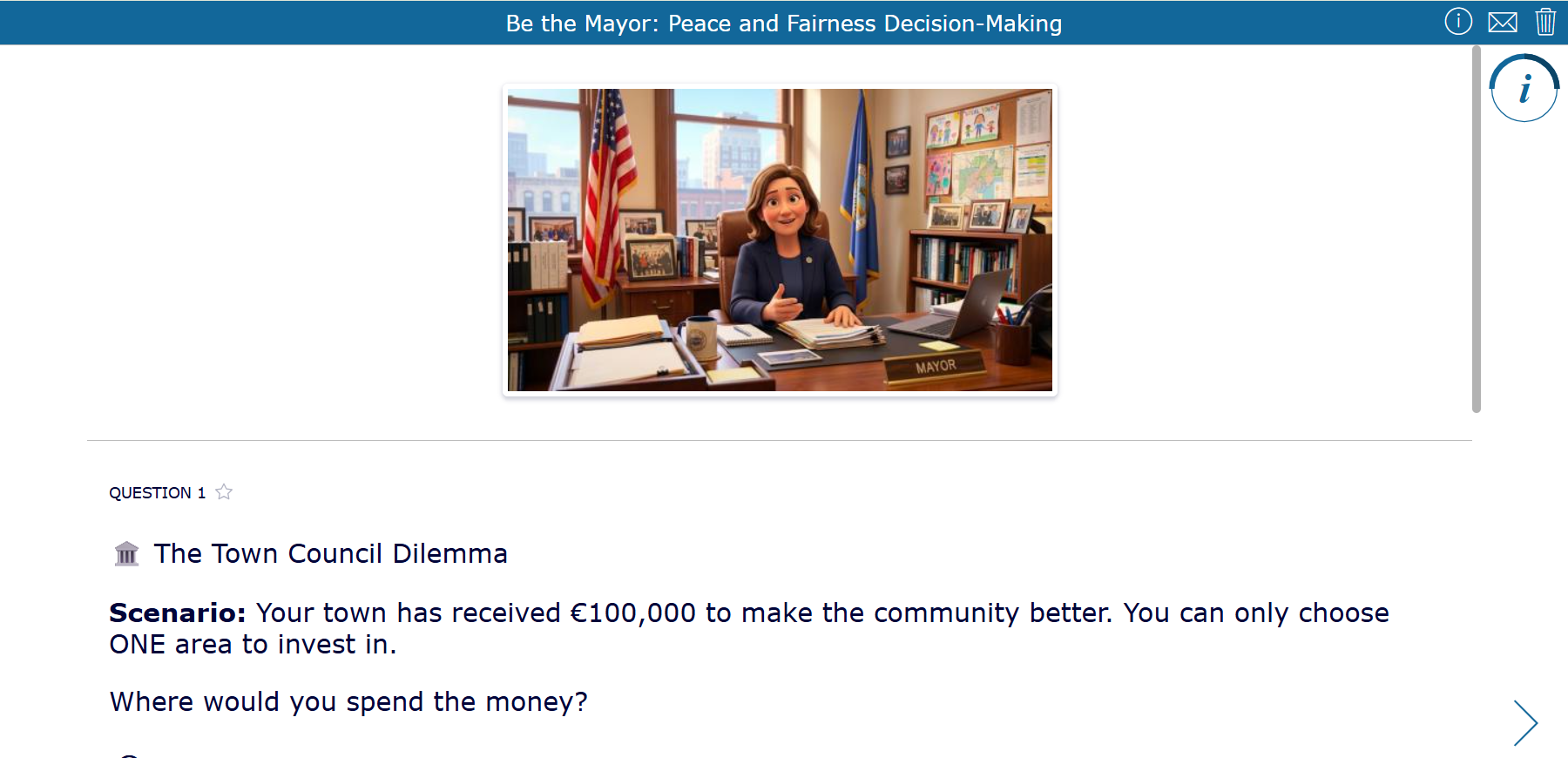
Starting a lesson with a question is one thing, but letting students make their own decisions before they even know the topic can make the discussion much more interesting. In this Lesson Starter quiz, middle school students (ages 11–14) take on the role of a mayor and make decisions about different situations in their town. They have to consider what is fair and responsible and choose what they think is the best solution.
Use this activity before introducing SDG 16, so students can approach the situations with their own ideas and reasoning. After the quiz, reveal the connection to SDG 16: Peace, Justice and Strong Institutions, and use their answers to start a discussion about peace, justice, equality, and fairness.
2. Kindness and Empathy Quiz
| Icon | Area | Explanation |
|---|---|---|
| 🎓 | Subject & Grade | Social-emotional learning and citizenship education - primary school |
| 🎯 | Learning goal | Students recognize kind and unkind behavior and explore how their actions can contribute to empathy, respect, and peaceful relationships. |
| 🧩 | BookWidgets widget type | Quiz |
| ⏱️ | Time needed | 10–15 minutes |
Understanding peace can start with something as simple as recognizing how our actions affect other people. In this Kind or Not Kind quiz, younger students look at different everyday situations and decide whether the behavior shown is kind or unkind. This helps them think about how they treat others and recognize behaviors that can make people feel included, respected, and safe.
After completing the quiz, continue the conversation by asking students why they made their choices and how they could respond differently in an unkind situation. This gives them an opportunity to explore kindness, empathy, respect, and peaceful behavior, while thinking about how small actions can help create a kinder classroom.

3. Peaceful Choices Sorting Activity
| Icon | Area | Explanation |
|---|---|---|
| 🎓 | Subject & Grade | Social-emotional learning - kindergarten |
| 🎯 | Learning goal | Students recognize peaceful and non-peaceful situations and begin to explore kindness, respect, and peaceful behavior. |
| 🧩 | BookWidgets widget type | Quiz - Group items |
| ⏱️ | Time needed | 10–15 minutes |
Young children encounter many different situations at school, but do they always know which ones are peaceful? In this Is It Peaceful? activity, kindergarten students look at pictures and sort them into the right groups using the Group Items question type in the BookWidgets Quiz widget. Audio support makes the activity accessible for children who are not yet reading independently.
Turn the activity into a conversation about peace and positive behavior. Ask students to explain their choices and discuss what could make a non-peaceful situation more positive. This gives them an opportunity to explore kindness, respect, and the role they can play in creating a peaceful classroom.

4. Build a Peaceful Classroom
| Icon | Area | Explanation |
|---|---|---|
| 🎓 | Subject & Grade | Social-emotional learning - kindergarten |
| 🎯 | Learning goal | Students identify actions and choices that help create a happy and peaceful classroom. |
| 🧩 | BookWidgets widget type | Quiz - Picture drag & drop |
| ⏱️ | Time needed | 15–20 minutes |
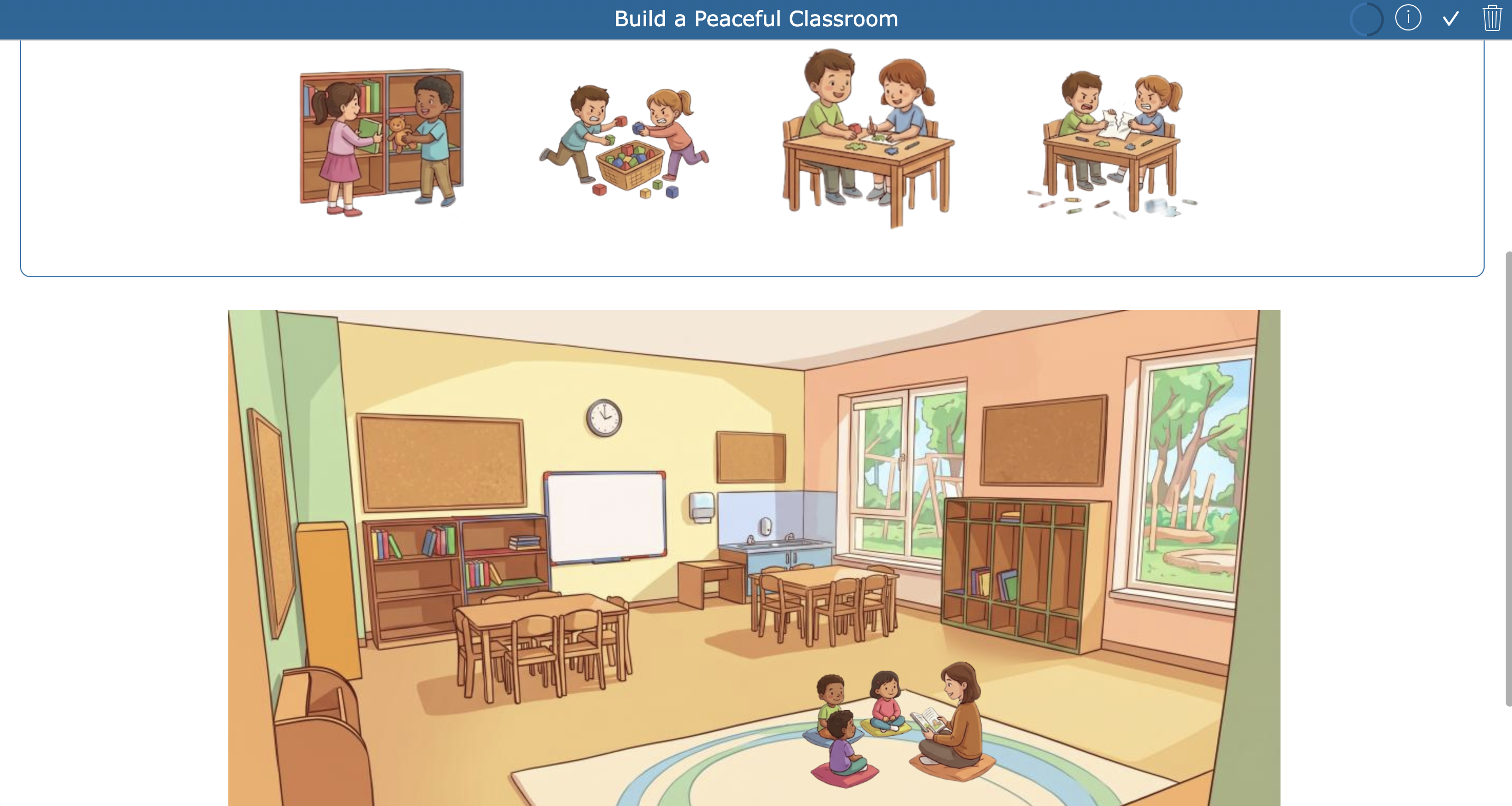
Creating a peaceful classroom starts with small choices. In this Build a Peaceful Classroom activity, kindergarten students use pictures to build a happy and peaceful classroom. A teacher should be present to guide the activity and help students understand the different choices.
Use this as a classroom activity and go through it together with your students. Discuss each picture as a class and ask students which choices help create a safe, happy, and peaceful classroom. This makes the activity a simple and interactive way to talk about how everyone can help create a peaceful classroom.
5. Goldilocks: Rules and Responsibility
| Icon | Area | Explanation |
|---|---|---|
| 🎓 | Subject & Grade | Social studies and language arts - middle school |
| 🎯 | Learning goal | Students explore rules, boundaries, responsibility, and fairness through a familiar story. |
| 🧩 | BookWidgets widget type | Split Worksheet |
| ⏱️ | Time needed | 30–45 minutes |
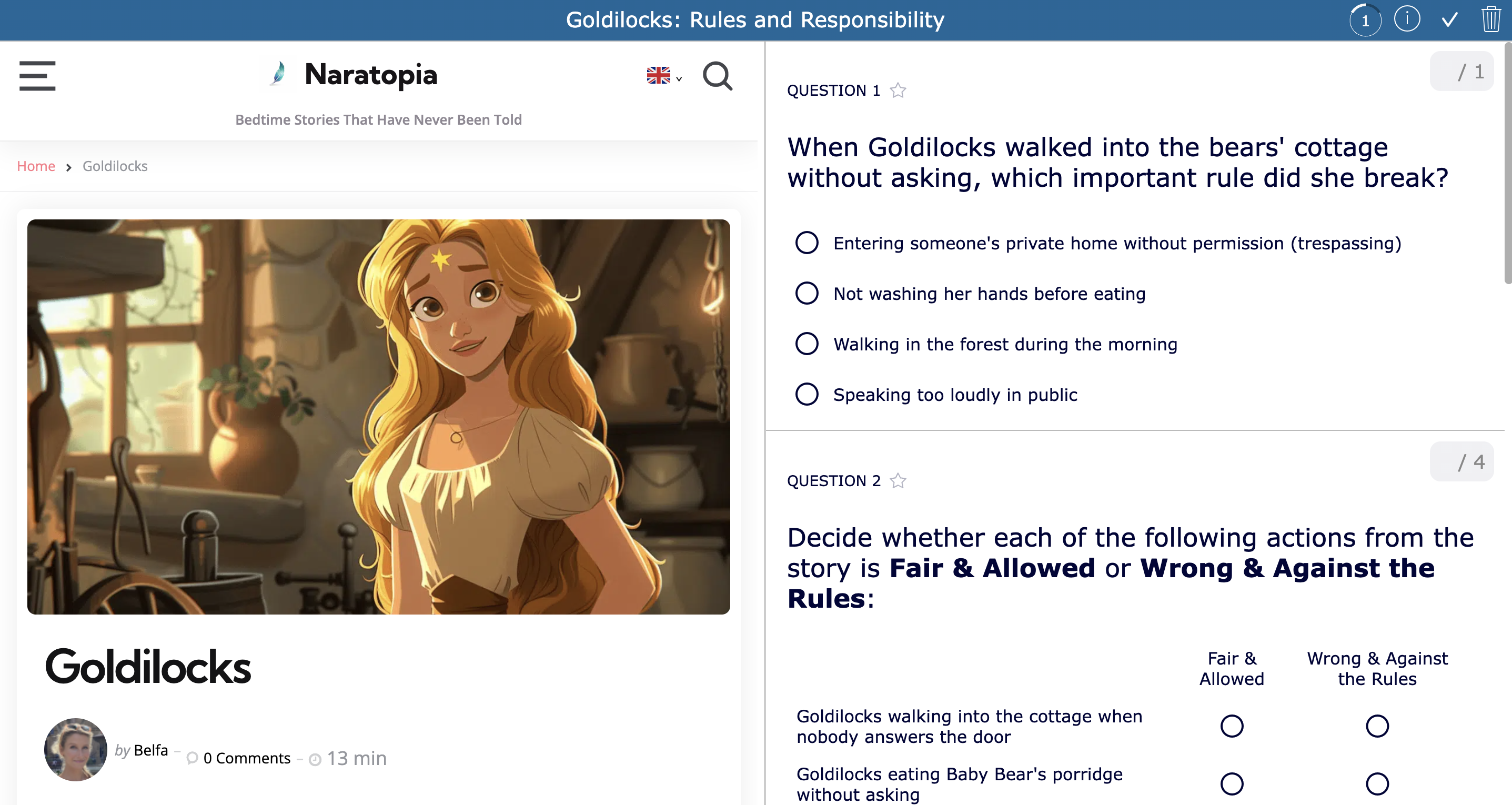
What can a familiar fairy tale teach us about rules and responsibility? In this Goldilocks activity, middle school students read the story and complete a quiz about Goldilocks' actions. They explore questions about boundaries, responsibility, and whether her choices are fair and respectful.
Introduce this activity to start a deeper discussion about rules and respecting other people's belongings and space. After completing the quiz, ask students whether Goldilocks' actions could have been handled differently and what we can learn from the story about making responsible choices.
6. Classroom Debate: Democracy and Fairness
| Icon | Area | Explanation |
|---|---|---|
| 🎓 | Subject & Grade | Social studies and civic education - middle school |
| 🎯 | Learning goal | Students explore democracy, fairness, and different viewpoints through group discussion. |
| 🧩 | BookWidgets widget type | Hotspot |
| ⏱️ | Time needed | 20–30 minutes |
How can students practice democracy in the classroom? In this Classroom Democracy activity, middle school students explore different situations shown on an interactive image. They discuss each situation in groups and share their opinions, giving them a chance to consider different viewpoints.
Introduce this activity by discussing ideas such as democracy, fairness, equality, and participation. After the group discussions, bring the class together to compare their answers. This helps students understand how listening to different opinions can support a fair and inclusive classroom.

7. Peace, Justice and Strong Institutions Video Quiz
| Icon | Area | Explanation |
|---|---|---|
| 🎓 | Subject & Grade | Social studies - primary school |
| 🎯 | Learning goal | Students learn about SDG 16 and explore why peace, fairness, and justice are important. |
| 🧩 | BookWidgets widget type | Video Quiz |
| ⏱️ | Time needed | 15–20 minutes |
What do peace and justice mean in everyday life? In this Peace, Justice and Strong Institutions video quiz, primary school students learn about SDG 16 while watching a video. Questions during the video help students stay focused and check what they have learned.
A Video Quiz works well for this type of activity because it combines video with questions that appear as students watch. This allows you to introduce SDG 16 in a simple and engaging way while checking students’ understanding along the way. After watching the video, talk with students about why peace, fairness, and justice are important and how they can help create a safe and fair classroom. This gives students an easy introduction to the main ideas of SDG 16.

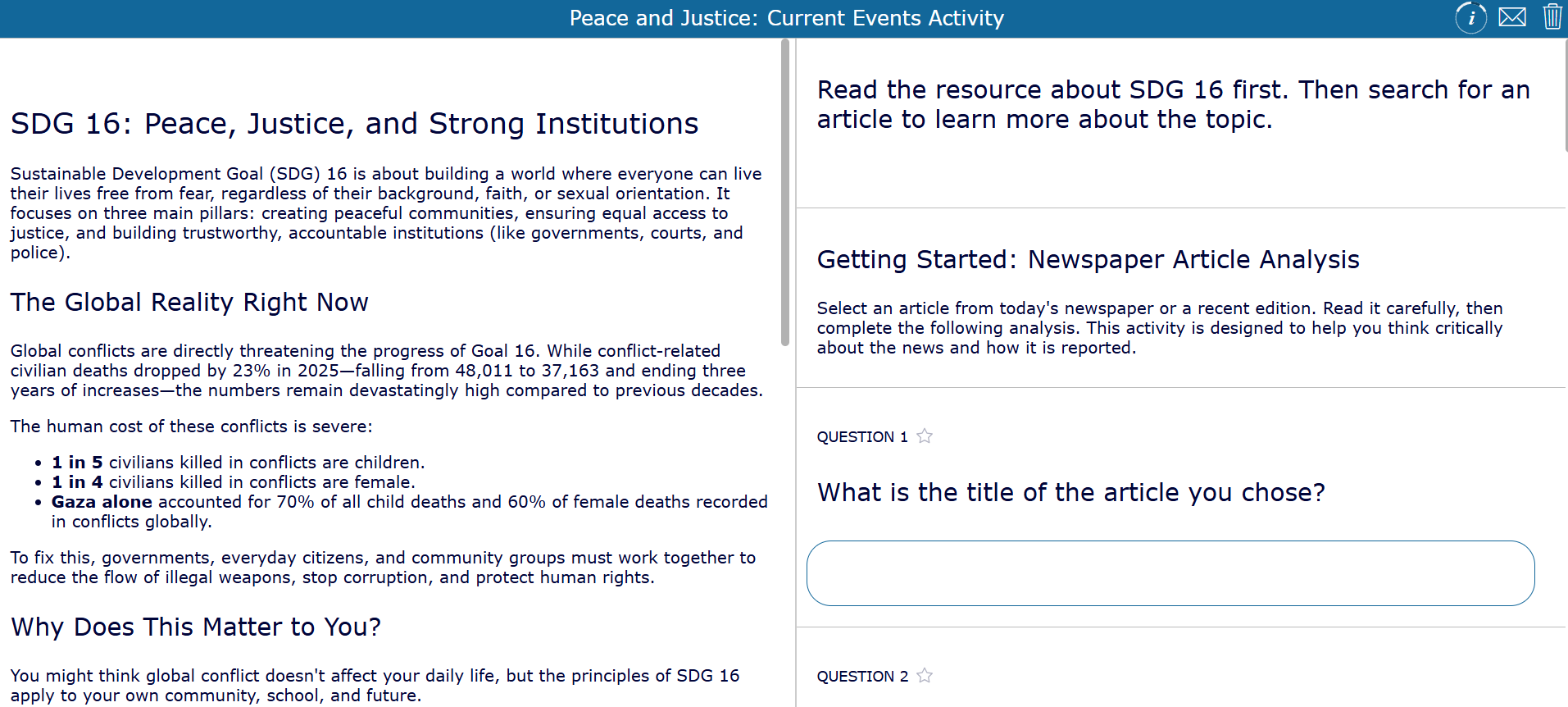
8. Peace and Justice: Current Events Activity
| Icon | Area | Explanation |
|---|---|---|
| 🎓 | Subject & Grade | Social studies and language arts - high school |
| 🎯 | Learning goal | Students connect current events to peace, justice, and strong institutions. |
| 🧩 | BookWidgets widget type | Split Worksheet |
| ⏱️ | Time needed | 30–45 minutes |
News stories can be a great way to make SDG 16 feel more relevant to students. In this Newspaper Articles activity, students explore examples of news related to peace, justice, and strong institutions. They then find their own newspaper article and use it to explore how SDG 16 connects to real-world events.
After finding an article, let students explain which part of SDG 16 it connects to and why they chose it. You can also use their articles as a starting point for a class discussion about current events, different opinions, and the role of justice and institutions in society.
More ready-to-use SDG lesson plans and resources
Reminder: This is part ten of our blog post series with lesson activities for teaching the United Nations Sustainable Development Goals. We will post a new blog about the next SDG every month. Go check out earlier blog posts on the SDGs:
- 8 Engaging Lesson Plans to Teach "SDG 1: No Poverty" to Your Students
- 8 Creative Ways to Teach "SDG 2: Zero Hunger" to Your Students
- 8 Free Lesson Plans to Teach "SDG 3: Good Health and Well-Being"
- Bringing SDG 4 into the Classroom: 8 Lesson Ideas for Quality Education
- 8 Free Lesson Plans on SDG 5 Gender Equality for all Grade Level Students
- 8 Free Digital Lessons for Teaching SDG 6: Clean Water and Sanitation
- 8 Exciting Lesson Ideas to Teach Students About SDG 7: Affordable and Clean Energy
- 8 Digital Lessons to Teach Students about SDG 8: Decent Work and Economic Growth
- 8 Creative Ways to Teach SDG 9 - Infrastructure, Industrialization and Innovation - in Your Classroom
- SDG 10 Explained for Students: 8 Digital Lesson Plans on Reduced Inequalities
- Bringing SDG 11 into the Classroom: 8 Lesson Ideas for Sustainable Cities & Communities
- 8 Creative Lesson Plans to Teach SDG 12: Responsible Consumption & Production
- 8 Digital Lessons on SDG 13 to Engage Students with Climate Change
- 8 Creative SDG 14 Lesson Plans for Teaching Life Below Water
- 8 Inspiring SDG 15 Lesson Plans for Teaching Life on Land
And if you can't wait this long for all the other posts, we've already created 1 lesson for each SDG in this digital group work planner activity. Here's the blog post about teaching the SDGs. You can find all the separate SDG activities in this BookWidgets group folder, in case you want to duplicate the activities and make some changes.
Wrap Up
Teaching SDG 16: Peace, Justice and Strong Institutions gives students the chance to explore what it means to live together in a fair, respectful, and peaceful society.
The topics behind SDG 16 are all around us. Students can think about how conflicts are solved, why rules matter, what fairness looks like, how people can participate in decisions, and how our actions affect others. By exploring these ideas through age-appropriate activities, students can begin to understand that peace and justice are not only big global issues. They also start with the choices we make in our classrooms, schools, and communities.
BookWidgets makes it easy to turn these conversations into interactive learning experiences. From quizzes and picture activities to video quizzes, interactive images, and real-world newspaper articles, students can explore SDG 16 in different ways. Copy the activities to your BookWidgets account, adapt them to your students, and share them through your LMS. You can find all the SDG 16 lesson activities in this BookWidgets group.
Want more ideas for creating engaging lessons with BookWidgets?
✔️ Sign up for upcoming free webinars and watch recordings on the BookWidgets Teacher Academy Page.
✔️ Follow BookWidgets on BlueSky and LinkedIn, and join our teacher community on Facebook!


