5 Easy Steps to Make Schoology Assignments More Interactive
 Lucie Renard —
PowerSchool Learning Management, a.k.a Schoology is a K-12 LMS that makes it easy to organize courses, share learning materials, and assign work. But sometimes you want students to do more than read instructions, open a document, or type an answer.
What if students could complete an interactive worksheet, label an image, solve a problem on a digital whiteboard, answer questions in a crossword puzzle, record their voice, or get instant feedback on their answers, all from their familiar Schoology course?
You can add those kinds of interactive assignments to Schoology with BookWidgets.
BookWidgets is a digital lesson creation and evaluation tool that integrates with Schoology. Teachers can choose between over 40 different interactive exercise templates, share them with students through their Schoology course, follow student progress while they work, and review and return student answers afterward. Grades can also be sent back to the Schoology gradebook.
And the workflow is easier than you might think.
In this guide, we'll walk through the complete process in 5 practical steps:
- Get to BookWidgets from your Schoology course.
- Create your first interactive assignment.
- Share the activity with students in Schoology.
- Follow student progress in real time with Live Widgets.
- Review student answers, provide feedback, and return their work.
By the end, you'll see how Schoology can become more than a place to distribute assignments: it can become the starting point for an interactive lesson, from creation to feedback.
💡Teacher tip! Make sure to read all the way through! At the end of this post, you'll also find 7 ready-to-use BookWidgets lesson examples for different subjects: History, Math, Languages, Chemistry, Arts, Biology, and Physics
Step 1. Get to BookWidgets from your Schoology course
The first advantage of the BookWidgets integration is that you don't have to start by sending students to another platform. Start where you already organize your lessons: inside Schoology. Open the Schoology course in which you want to create an interactive assignment and access BookWidgets through your Schoology integration.
Once BookWidgets is connected, teachers can start creating interactive lessons, assignments, and tests from within the Schoology environment. The same goes for your students. The Schoology Single Sign-On or login connects the students to the BookWidgets lessons without requiring a separate sign-in workflow.
⚠️ Important: Your Schoology administrator needs to install and configure the BookWidgets integration before you can use it. If you don't see BookWidgets in Schoology, check with your school's Schoology administrator. Here a resource to share with your Schoology admin:
| Admin instructions | What to do |
|---|---|
| Schoology admin setup tutorial | A step-by-step guide for Schoology administrators on how to set up and connect BookWidgets in Schoology, so teachers can start creating and assigning interactive activities from their courses. |
| Returning feedback within the widget settings | If you do not have the ability to return work to Schoology through the widget your students just finished, please speak to the administrator of the Schoology platform and request the addition of the “custom parameter”. If your BookWidgets LTI registration dates from before October 2024, your admin must add the following text in the field for custom parameters: feedback_via_play=1. If your BookWidgets LTI registration is more recent than October 2024, you may leave this field blank. |
Why this integration matters
Students already know where to find their Schoology assignments. Keeping the interactive activity connected to the same course reduces unnecessary navigation and keeps your digital lesson workflow together.
You can use Schoology as your learning environment while BookWidgets adds the interactive content, assessment, monitoring, and feedback possibilities.
💡 BookWidgets Teacher tip: For your first BookWidgets assignment, choose a course and lesson you already teach. Don't redesign the entire lesson. Replace just one existing worksheet, quiz, or exit ticket with an interactive version.
Step 2. Create an interactive widget
Now comes the creative part.
In BookWidgets, an interactive activity is called a widget. You can choose from more than 40 widget types, including multimedia quizzes, exit tickets, whiteboards, timelines, flashcards, WebQuests, and games. A quiz widget even has over 35 question types to choose from!
For your first Schoology assignment, a Quiz is a good place to start because you can combine different kinds of options, content, and questions in one activity. For example, instead of creating a quiz with ten identical multiple-choice questions, you could ask students to:
- complete a fill-in-the-blanks exercise;
- match concepts and definitions;
- drag answers into the correct order;
- annotate an image;
- solve a calculation;
- record an audio response;
- draw their reasoning on a whiteboard;
- upload a photo;
- or explain their thinking in an open-ended response.
Many question types can be graded automatically, while open-ended questions can be evaluated manually or by using a scoring rubric. All questions support teacher review and feedback within the BookWidgets reporting dashboard.
Build the activity around the learning goal
Interactivity works best when the question type has a purpose.
- If students need to recall information, use auto-graded questions for quick practice.
- If they need to show their thinking, use a Whiteboard, Long Answer, or Rich Text Answer question.
- If you're assessing speaking or pronunciation, use an Audio Recording question.
- If students need to analyze something visual, use an image-based question, annotation activity, or Whiteboard question.
- If the goal is formative assessment, create a short exit ticket that tells you what to revisit in the next lesson.
BookWidgets also allows teachers to combine text, images, audio, video, and interactive questions, so the activity can become a complete digital lesson rather than simply a digital copy of a paper worksheet.
💡 BookWidgets Teacher tip: When you're new to BookWidgets, this ultimate questions blog post guide will help you with composing your first questions.
Don't forget about open-ended assessment
Not every useful student response needs to be automatically graded.
For open-ended assignments, teachers can add scoring rubrics directly to open-ended question types, including Long Answer, Rich Text Answer, Whiteboard, Photo, and Audio Recording questions. The rubric then stays connected to the student's response when the teacher reviews the work.
That can be useful for essays, scientific explanations, oral-language tasks, creative assignments, project evidence, and mathematical reasoning.
💡 BookWidgets Teacher tip: Your first widget doesn't need twenty questions. A three-question exit ticket or five-minute retrieval activity is enough to learn the workflow.
Step 3. Share your widget with students in Schoology
Once your activity is ready, the next step is to make it available to your students. Before you do that, make sure to preview the activity and check whether:
- the instructions are clear;
- all questions work as intended;
- the correct answers and points are configured properly;
- students should receive immediate feedback or wait for teacher feedback;
- students should be allowed to submit their answers;
- the correct security options are in place.
The right settings depend on the purpose of the assignment.
- For a practice activity, immediate correction can help students learn from mistakes right away. Immediate correction is enabled by default.
- For a test, you may prefer to hide correct answers until everyone has completed the assessment, or until you decide to return the correction, grades and additional teacher feedback.
- For an open-ended assignment, you may want students to wait until you've added personalized comments or rubric scores.
All checked? It's time to share the BookWidgets assignment with your students in Schoology. Because you're using the Schoology integration, the widget becomes part of your existing Schoology course workflow rather than an isolated activity students have to find somewhere else.
Go to the correct Schoology course, add your BookWidgets activity to the course materials, and select the widget you want students to complete.
Students can then open the interactive activity from that same Schoology course and submit their answers when they're finished. The BookWidgets-Schoology integration also supports sending grades back to the Schoology gradebook.
💡 BookWidgets Teacher tip: Always open your finished activity in preview mode before assigning it. Look at it from the student's perspective and check both the instructions and what happens after submission.
Step 4. Live monitor your students with Live Widgets
Sharing an interactive assignment is useful. Seeing what's happening while students are working on it makes it much more powerful.
With Live Widgets, you can follow student activity in real time while students complete their BookWidgets assignments through Schoology.
Instead of waiting until everyone submits, you can see how the lesson is progressing while there's still time to act.
For example, you may notice that:
- several students are stuck on the same question;
- one student hasn't started yet;
- a student has stopped progressing;
- most of the class misunderstood a concept;
- some students have already finished and need an extra challenge.
That turns Live Widgets into a formative teaching tool rather than simply a monitoring screen.
Set up Live Widgets before the lesson
Before using the feature for the first time, make sure Live Widgets tracking is enabled in your BookWidgets account settings, or through the Live Widgets dashboard. You can find the Live Widgets dashboard through the BookWidgets results tab in Schoology, or within your connected BookWidgets account. The activity needs to be shared through a supported LMS integration such as Schoology.
Once students begin the activity, open the Live Widgets dashboard or click the Follow tab in BookWidgets and select the activity you want to monitor. You can then follow student progress and, for supported widgets, inspect individual responses as students work.
Use the data to teach, not just to watch
Imagine that your class is working through a ten-question math assignment. In the Live Widgets dashboard, you notice that many students are struggling with question four. You don't need to wait until tomorrow to address it. Pause the class for two minutes, work through the misconception together, and then let students continue.
Or imagine that three students have already completed the assignment correctly while other students still need time. You can give those students an extension task rather than making them wait.
That's the real advantage of real-time monitoring: you can differentiate while the learning is happening.
💡 BookWidgets Teacher tip: Don't try to inspect every student's answer continuously. Look for patterns. Which question is causing trouble? Who has stopped progressing? Who needs a challenge? Those signals are often more useful than watching every move.
Step 5. Provide feedback and return student answers
Students have finished and submitted the activity.
Now BookWidgets can help with the part teachers often spend the most time on: reviewing student work and giving meaningful feedback.
When students submit an activity, their work becomes available in the BookWidgets reporting dashboard.
You can review responses in two useful ways:
- Student by student lets you look at one student's complete assignment and understand their overall performance.
- Question by question lets you compare the whole class on one question, making it much easier to spot common misconceptions or repeatedly occurring mistakes.
💡 BookWidgets Teacher tip: Watch this insightful 1-hour webinar where we guide you through the BookWidgets reporting dashboard and demonstrate how you can save time grading and reviewing student work.
Let auto-grading handle what it can, add feedback where it will help
Many closed question types can already be graded automatically.
That means you can spend less time checking straightforward answers and more time reviewing responses that actually require professional judgment. Even though grades will be automatically assigned, you can still adjust scores manually when necessary.
A score tells students how they performed. Feedback tells them what to do next.
In the reporting dashboard, teachers can add personalized comments and reusable correction labels to student work. BookWidgets also supports audio feedback, which can be useful when a spoken explanation is clearer than a long written comment.
For open-ended questions, a scoring rubric can help you evaluate specific criteria consistently while keeping the rubric alongside the student's actual response.
Return the work to students
Once you've reviewed the assignment, you can return the corrected work so students can see the feedback, corrections, and results you've chosen to share.
BookWidgets allows teachers to customize what gets returned to students, and Schoology integration keeps grading connected to the LMS workflow.
This closes the learning loop: Create → Share → Monitor → Review → Give feedback → Return
And that final step matters.
An interactive assignment shouldn't end when students press Submit. The answers can help you decide what to reteach, what a student needs to practice, and who is ready for the next challenge.
⚠️ Important! If you do not have the ability to return work to Schoology through this method, please speak to the administrator of the Schoology platform and request the addition of the “custom parameter”. If your BookWidgets LTI registration dates from before October 2024, your admin must add the following text in the field for custom parameters: feedback_via_play=1. If your BookWidgets LTI registration is more recent than October 2024, you may leave this field blank.
💡 BookWidgets Teacher tip: Before returning an assignment, ask yourself one question: What do I want students to do with this feedback? If possible, let them correct an answer, retry a question, explain a mistake, or use your feedback in their next assignment. Students can easily switch from their feedback to the assignment, edit their answers (when enabled in the widget options), and submit a second time.
7 interactive lesson examples you can use in Schoology
Ready to see the workflow in action? Check out the BookWidgets lesson plans below to fully understand the power of this integration. Imagine you sharing interactive lessons like these to your Schoology course!
| Lesson idea | Open the widget |
|---|---|
| History - Students explore daily life in Ancient Egypt, including homes, food, farming, and the workers’ village of Deir el-Medina. They analyze images, floor plans, historical texts, videos, and artifacts while answering structured questions alongside each resource. |  |
| Languages - Students can practice speaking and listening skills at the same time. Add a video where students get asked questions (listening), pause the video right after, and show an audio recording of the question so students can record their answer to the question with their voice (speaking). | 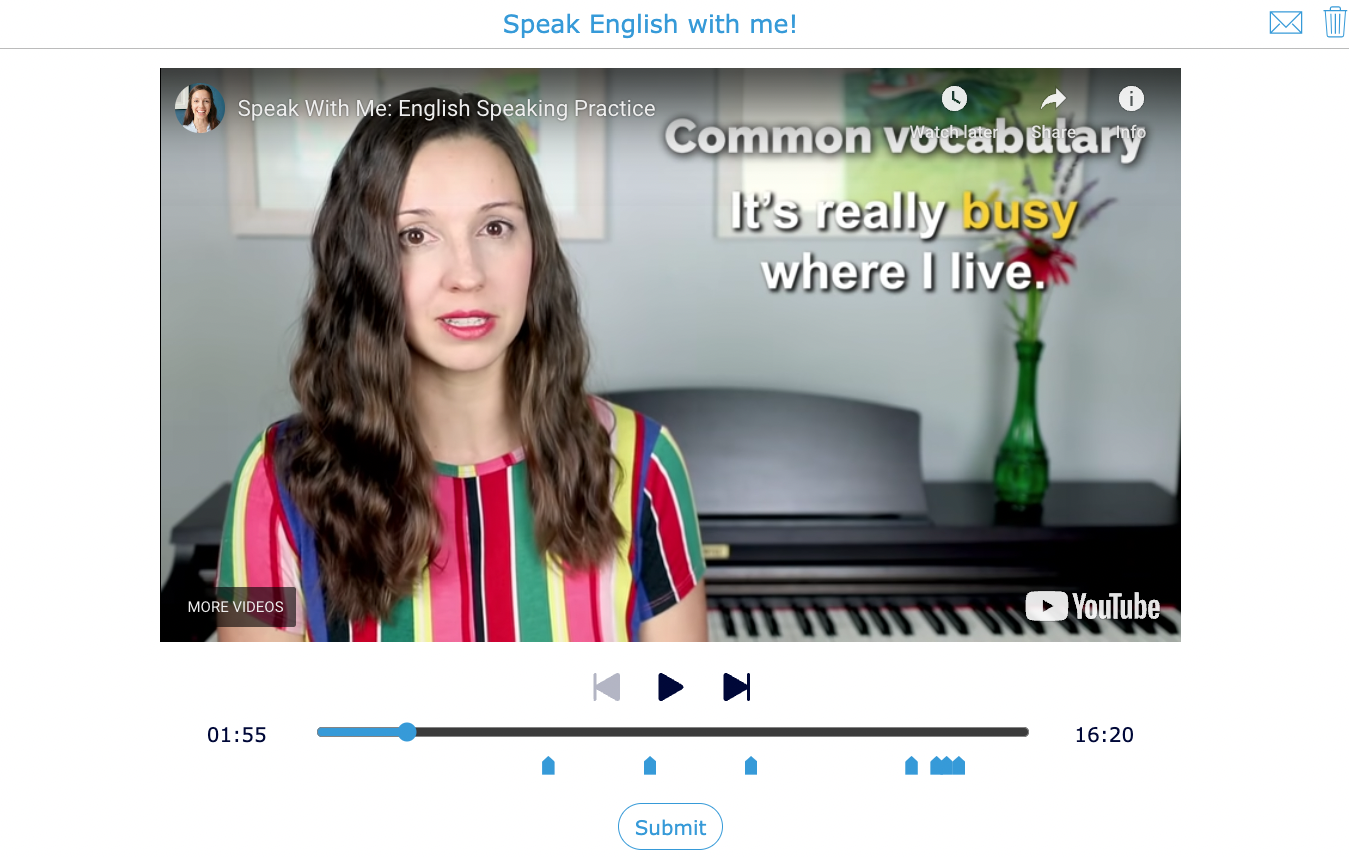 |
| Math - Students watch a repetition video and practice 2-digit multiplication right next to it! | 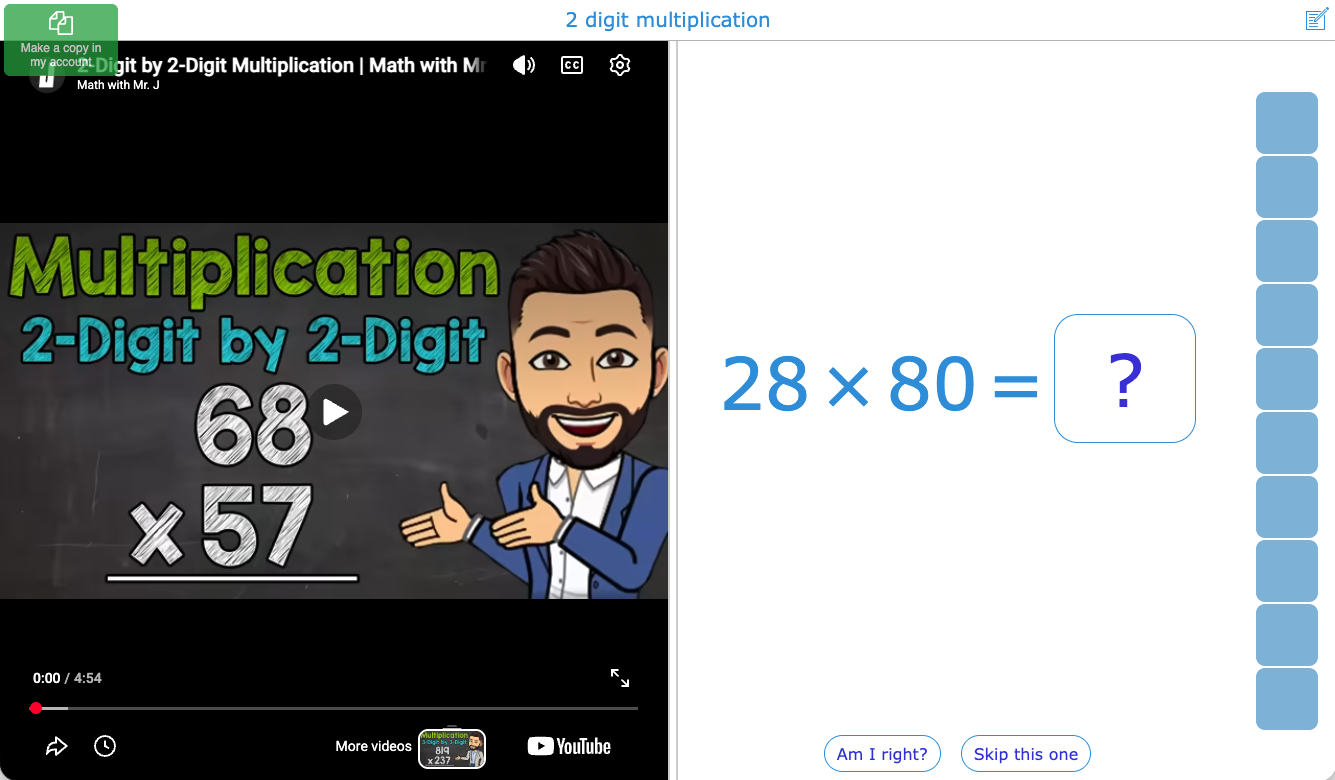 |
| Chemistry - Get to know your students by letting them connect their personality, interests, or learning habits to elements from the periodic table. | 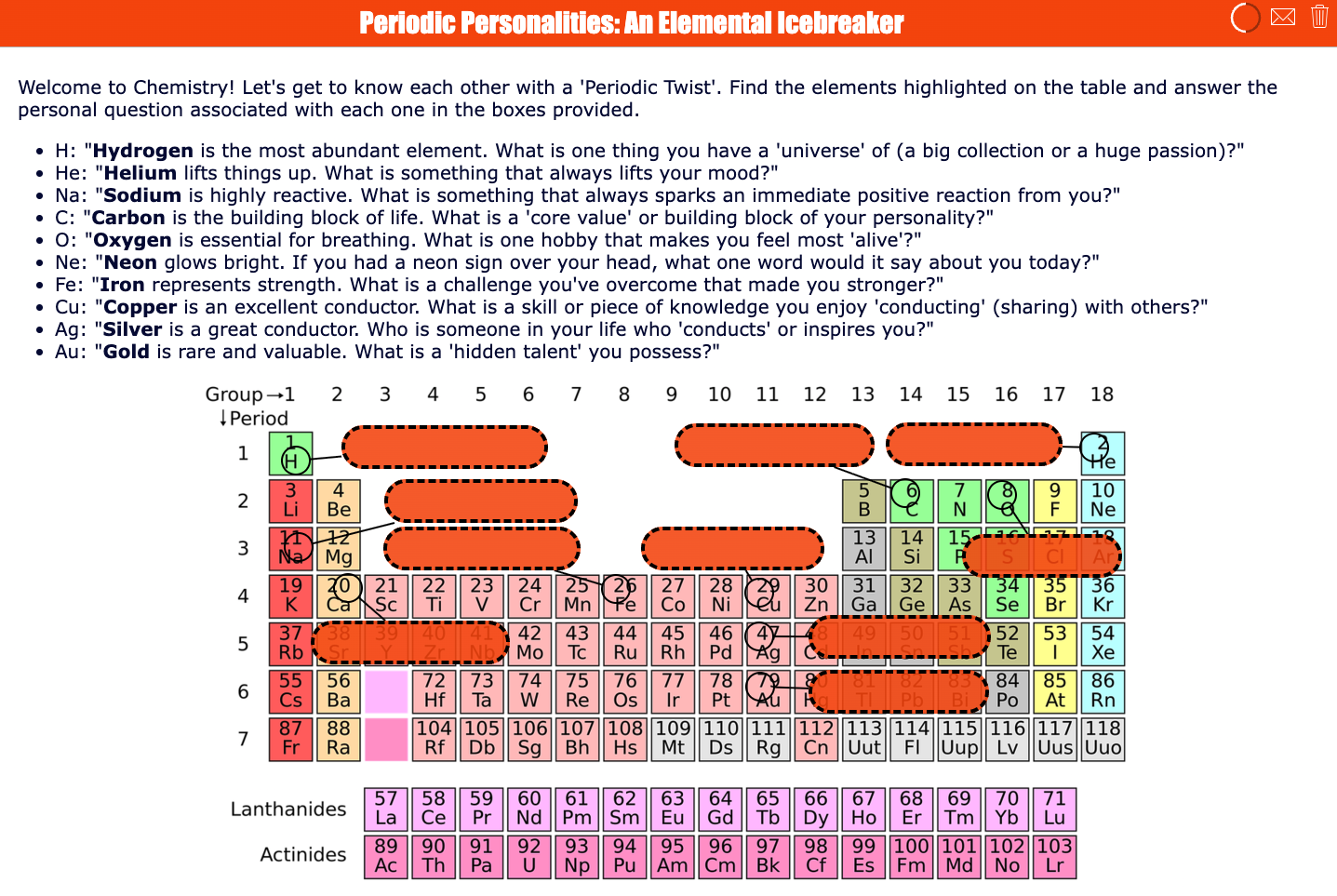 |
| Physics - In this lesson, students manipulate objects with different masses and volumes to discover how density affects floating and sinking. | 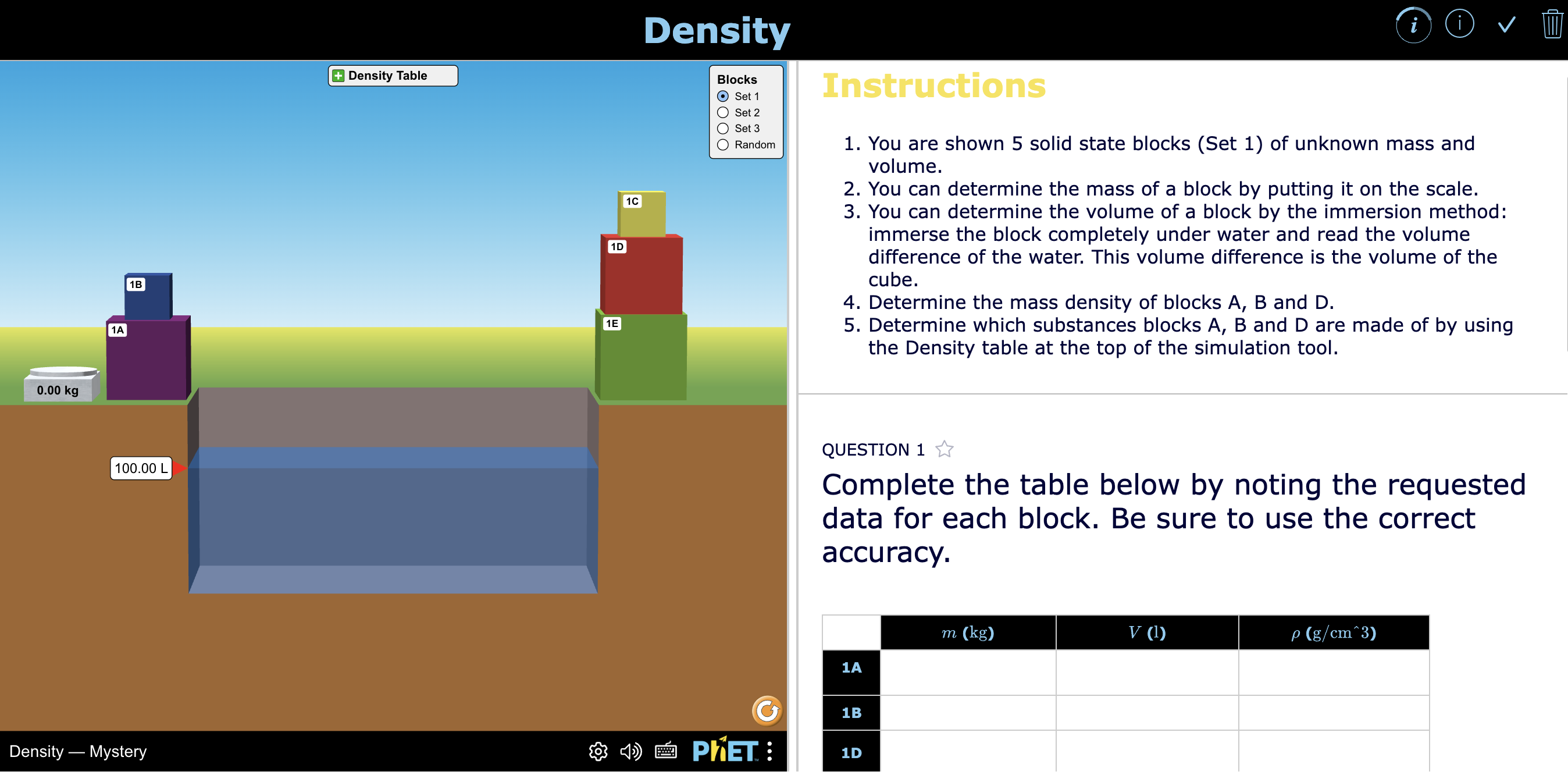 |
| Biology - In this WebQuest with a Natural Selection simulation, students explore adaptation, variation, and survival by testing how environmental factors affect survival rates. |  |
| Arts - Students create a visual self-portrait using symbols instead of only drawing their face. They might include a favorite color, an object they love, a shape that fits their personality, or a symbol for something important to them. | 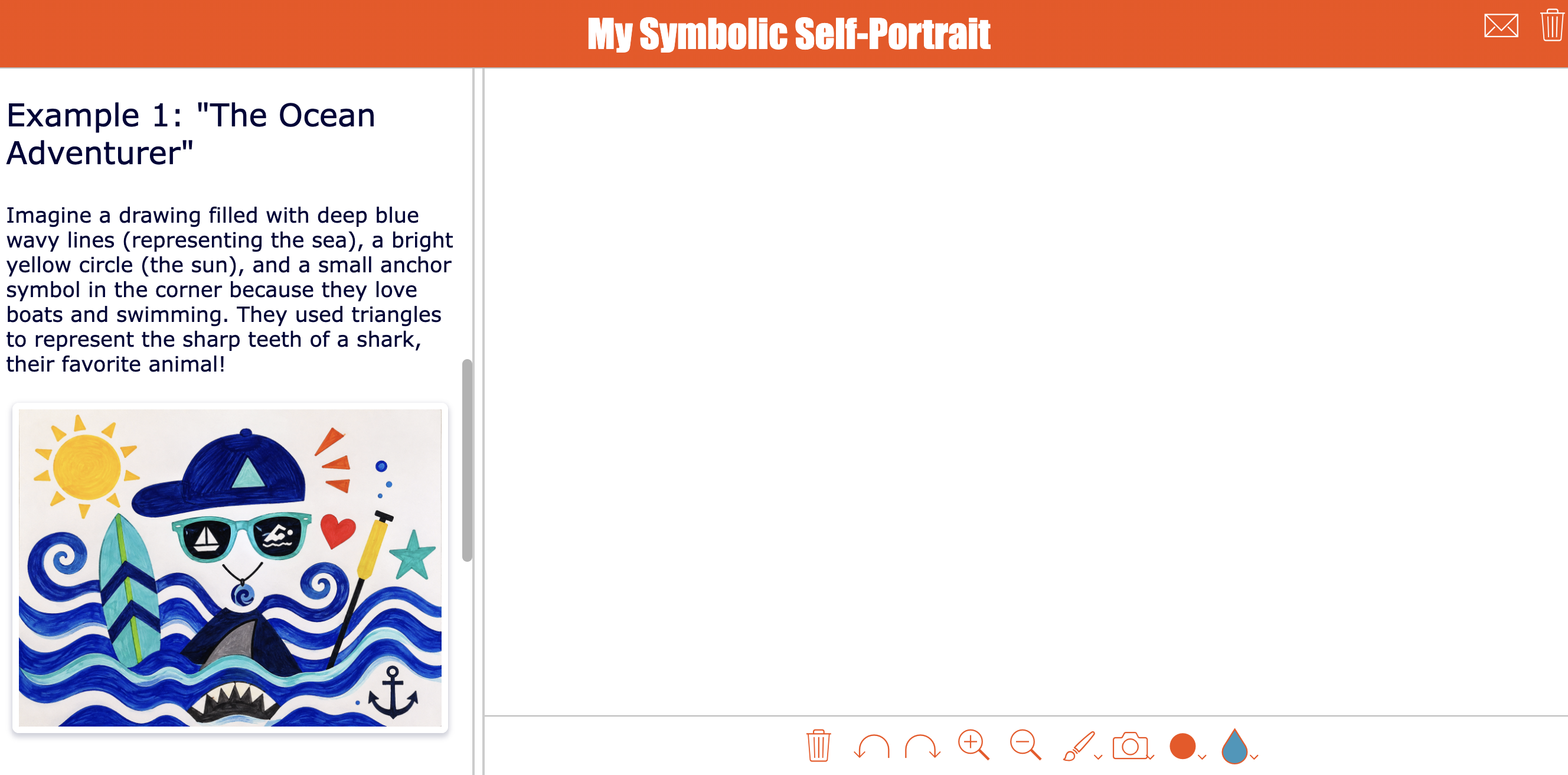 |
Wrap up
Want to get started with BookWidgets in Schoology? Start small: choose 3 question types for your next lesson.
Want to learn more about creating engaging lesson activities with BookWidgets?
✔️ Sign up for upcoming free webinars and view recordings on the BookWidgets Teacher Academy Page.
✔️ Follow BookWidgets on BlueSky and LinkedIn and join our teacher community on Facebook!
And me? I'm Lucie from BookWidgets. Follow me on LinkedIn 👋


